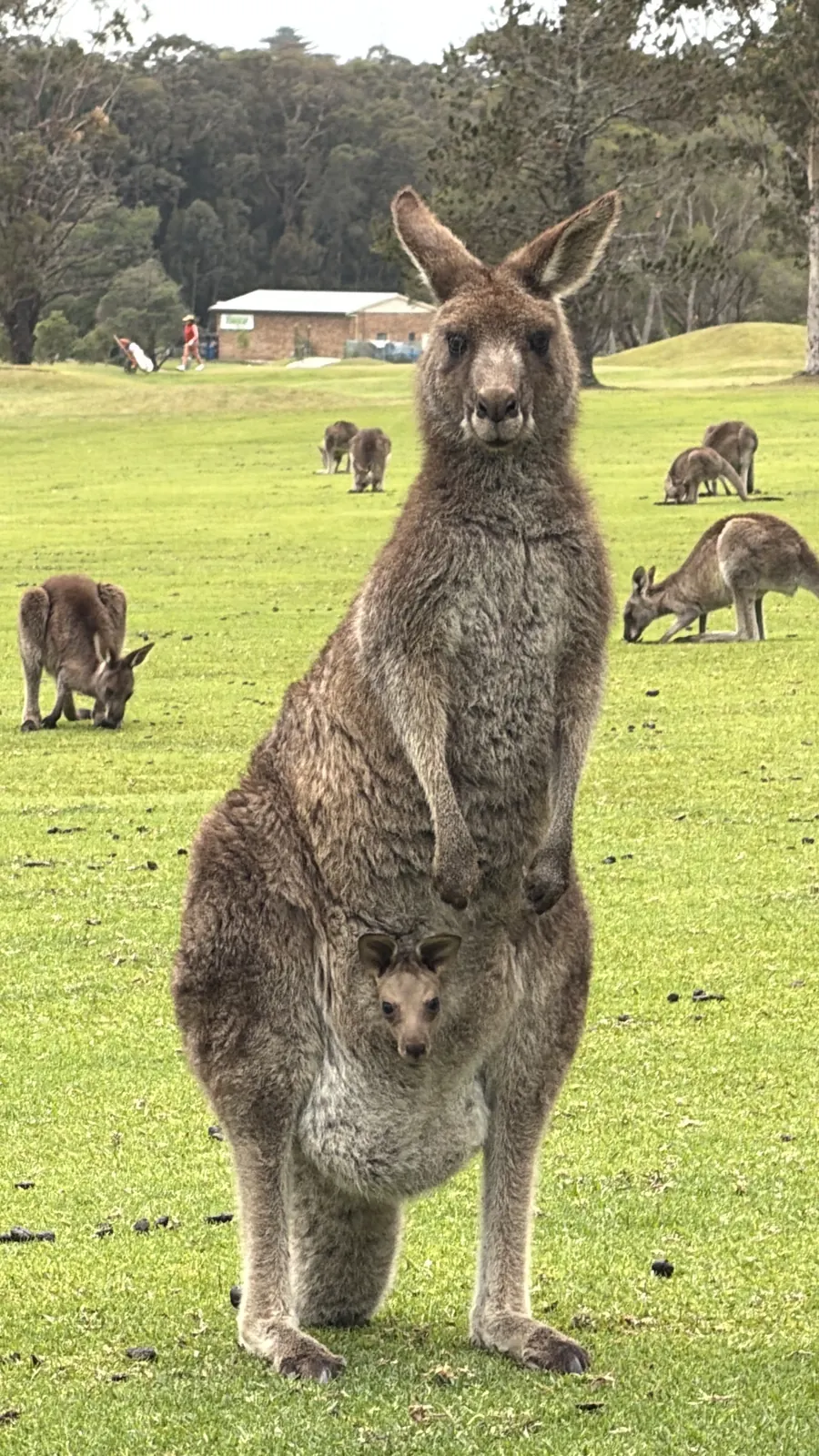
Short answer: you won’t see kangaroos hopping around Sydney’s city streets, but you don’t have to go far. For wild kangaroos, the easiest spots are Euroka Clearing near Glenbrook in the lower Blue Mountains (about an hour away), Jervis Bay on the South Coast and the vineyards of the Hunter Valley (both two to three hours away). For a guaranteed close encounter in the city, a wildlife park such as Featherdale in western Sydney lets you hand-feed them. Wherever you go, early morning and late afternoon are the best times.
Seeing a kangaroo is on almost every visitor’s list, and it’s one of the most common questions we get from guests. The good news is that eastern grey kangaroos are widespread around Sydney. The trick is knowing where they graze and when they come out. Here’s an honest guide to the best options, from a quick half-day outing to a full day trip.
Wild kangaroos vs wildlife parks: which should you choose?
Both are worth doing, but they are very different experiences.
- Wildlife parks are the sure thing. You can get close, take photos and often feed them, and they are easy to reach by public transport or a short drive. The trade-off is that the animals live in enclosures.
- Wild kangaroos are the more memorable moment: a mob grazing on open grass by a beach or between rows of vines, completely on their own terms. Sightings depend on time of day and luck, and most good spots need a car or a tour.
If you have one day and want both nature and kangaroos, a day trip to a place where they live in the wild usually gives you the best of everything.
The best places to see wild kangaroos near Sydney
1. Euroka Clearing, Blue Mountains National Park (about 1 hour)
The closest reliable spot to the city. Euroka is a grassy clearing and campground in the lower Blue Mountains, reached through Glenbrook via the Bruce Road entrance. A resident population of eastern grey kangaroos grazes there, and they are most active around dawn and dusk.
Good to know before you go:
- There’s a vehicle entry fee of $8 per day for the Glenbrook area of Blue Mountains National Park.
- The gates have set opening hours: 8:30am to 7pm from early October to early April, and 8:30am to 6pm for the rest of the year. That means you can’t arrive before sunrise, so aim for late afternoon instead.
- You need your own car. There’s no public transport into the clearing.
Euroka is great for a short outing, but it’s in the lower mountains, away from the famous lookouts. If you also want the Three Sisters and the waterfalls, read our Blue Mountains day trip guide.
2. Australian Botanic Garden, Mount Annan (about 1 hour)
Run by the Botanic Gardens of Sydney, this huge garden in Sydney’s south-west has open grassland where eastern greys are regularly seen grazing, especially early in the morning and late in the afternoon. It’s a relaxed option if you’re driving and only have half a day.
3. Jervis Bay and Booderee (about 3 hours)
Jervis Bay is one of the best places in New South Wales to see kangaroos in a beautiful natural setting. They graze on the grassy areas near beaches, picnic grounds and campgrounds in Jervis Bay National Park and Booderee National Park, and late afternoon is usually the busiest time.
What makes Jervis Bay special is the combination. In one day you can swim at Hyams Beach, famous for some of the whitest sand in the world, snorkel in calm clear water and then sit on the grass watching a mob of kangaroos. Our guide to things to do in Jervis Bay covers the beaches, walks and the drive down.
4. The Hunter Valley vineyards (about 2–2.5 hours)
Australia’s oldest wine region has a surprisingly large kangaroo population. They graze on the open fields around vineyards and golf courses, particularly in areas like Pokolbin and Lovedale, and come out more as the afternoon cools down.
Watching kangaroos between the vines after a few tastings is one of those moments guests tell us they never forget. We cover the wineries, cheese and chocolate stops in our Hunter Valley day trip guide.
5. Murramarang National Park: Pebbly Beach (about 3.5–4 hours)
Pebbly Beach, near Bawley Point, is well known for kangaroos that graze right down to the sand. It’s beautiful, but it’s a long way for a day trip from Sydney: better as part of a South Coast road trip with an overnight stay.
6. Other spots worth knowing
- Port Stephens: kangaroos are often seen on golf courses and grassy reserves around Salamander Bay. If you’re heading north for the sand dunes, see our Port Stephens day trip guide.
- Ku-ring-gai Chase National Park: The Basin campground, reached by ferry from Palm Beach or on foot, is known for wallabies and the occasional kangaroo.
- Royal National Park: you may see wallabies, but kangaroo sightings here are less reliable.
Wildlife parks in and around Sydney
If kangaroos are a must and time is short, a wildlife park is the safe bet.
- Featherdale Sydney Wildlife Park (Doonside, western Sydney): open 8am to 5pm daily. Adult entry is listed at $49 (children 3–15 are $29), and you can hand-feed kangaroos and wallabies in walk-through areas with food bought on site. Check their website for current prices before you go.
- Taronga Zoo Sydney: Australian animals are part of the zoo, which you can combine with the ferry ride across the harbour.
- WILD LIFE Sydney Zoo (Darling Harbour): an indoor option right in the city, handy on a rainy day or with kids.
Wildlife parks are perfect for close-up photos and for younger children. Just know that the feeling is different from seeing kangaroos free on a beach or in a vineyard.
When is the best time to see kangaroos?
Kangaroos rest in the shade during the heat of the day and come out to graze when it’s cooler. For wild sightings:
- Late afternoon to dusk is usually best, and the easiest time to plan around on a day trip.
- Early morning works too, if you can get to the spot that early.
- Season: you can see them all year. In summer (December to February) they’re even more active later in the day, as the midday heat keeps them in the shade.
- Weather: cloudy, mild days are often better than very hot ones.
How to see kangaroos safely and respectfully
Wild kangaroos are used to people in popular spots, but they are still wild animals. A large male can be strong and unpredictable.
- Keep your distance. Stay a few metres away, move slowly and let them come and go.
- Don’t feed them. Human food, bread and even carrots can make them sick and teaches them to approach people, which has led to injuries in some places.
- Never get between a mother and her joey, and give big males plenty of room.
- Don’t chase them for a photo. Zoom in instead. The best shots usually come when you sit quietly.
- Drive carefully at dawn and dusk. This is when kangaroos are most likely to be on or near the road, especially on country roads. It’s one of the reasons many visitors prefer someone else to do the driving.
Seeing kangaroos on a day tour from Sydney
Most of the best wild spots are two to three hours from the city, have limited or no public transport, and are at their best late in the day, when you’d then face a long drive home in the dark. A guided day trip solves all three.
At 77Tours, wild kangaroos are part of two of our small-group tours:
- Jervis Bay & South Coast Day Tour: the Sea Cliff Bridge, Kiama, Hyams Beach for a swim and snorkel, then a spot in Jervis Bay National Park where kangaroos graze freely. Sightings are almost guaranteed. We leave at 7:00am from Kopi Indulgence coffee shop, 44 Holt Street, Surry Hills (near Central Station).
- Hunter Valley Wine, Cheese & Chocolate Tour: wine, cheese, chocolate and spirits tastings, finishing in the vineyard fields where wild kangaroos often graze in the afternoon. Departs 7:30am from the same meeting point.
Groups are small, the pace is relaxed and we take professional photos of your day, so you don’t have to choose between watching the kangaroos and getting the shot. If you’d prefer hotel pick-up and a day planned around your family or friends, we also run private tours.
FAQ
Can you see kangaroos in Sydney city?
Not in the wild. There are no kangaroos living in the central city or around the harbour. In the city itself you can see them at Taronga Zoo or WILD LIFE Sydney Zoo, and for wild kangaroos you need to head at least an hour out, to places like Euroka in the lower Blue Mountains.
What is the closest place to Sydney to see wild kangaroos?
Euroka Clearing near Glenbrook, in Blue Mountains National Park, about an hour’s drive west of the city, and the Australian Botanic Garden at Mount Annan, about an hour south-west. Both are best in the early morning or late afternoon.
Can you touch or feed kangaroos?
Only at wildlife parks that allow it, such as Featherdale, where you buy approved food. In the wild, don’t touch or feed kangaroos: it’s bad for their health and can make them aggressive.
Are kangaroos dangerous?
They usually ignore people or hop away, but they can defend themselves if they feel threatened or are used to being fed. Keep a few metres away, avoid large males and never corner them.
Will I definitely see kangaroos on a Jervis Bay or Hunter Valley tour?
Nothing in nature is 100% guaranteed, but sightings are very common. On our Jervis Bay tour we visit a spot where kangaroos usually graze and sightings are almost guaranteed; in the Hunter Valley they’re very common in the vineyard fields in the afternoon.
Do I need a car to see kangaroos near Sydney?
For the wild spots, mostly yes, as public transport doesn’t reach them easily. Without a car, your options are a wildlife park in the city or a guided day tour that includes a kangaroo stop.

Founder & Tour Guide, 77Tours · Sydney, Australia · English & Portuguese